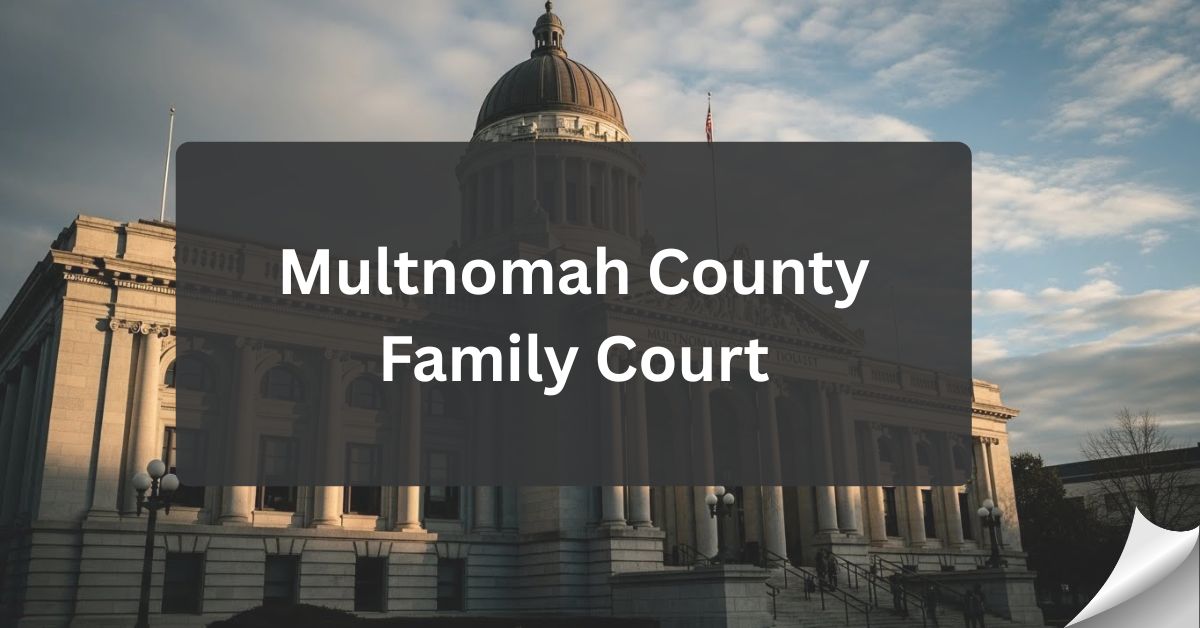
Multnomah County Family Court handles legal issues related to families and domestic matters. It provides a structured environment where cases like custody, divorce, and child support are resolved according to Oregon law.
The Multnomah County Family Court serves as a central authority for family law cases in the region. Its main responsibility is to ensure fair outcomes in matters involving children, spouses, and domestic relations. The court manages cases including divorce filings, child custody disputes, child support enforcement, and domestic relations issues such as restraining orders or guardianships. By organizing hearings and mediations, the court helps families reach resolutions while following legal standards.
How to Search Multnomah County Family Court Records
Family court records for Multnomah County Court can be looked up online through the Oregon Judicial Department’s public system or by requesting copies from the courthouse. Both options let users find case details, but online tools work faster for most general searches.
Start at the Official Court Records Site
- Open this official page in your browser:
https://www.courts.oregon.gov/how/Pages/find.aspx - Scroll to the section labeled “Find a case or court record.”
This is the main hub for searching cases across Oregon circuit courts, including Multnomah County. - You’ll see different options:
• Free Records Search (for basic case details)
• OJCIN OnLine / OECI (more detailed database access)
• Contact/Visit Court for restricted or sealed cases
Use the Free Records Search
This tool shows basic case details like hearing dates, parties, and case status.
Steps:
- From the official page, select “Find a Case or Court Record.”
- If needed, click the Free Records Search link.
- Enter one of these search terms:
- Full name (Last, First)
- Case number
- Filing year range
- Click Search.
- A list of matching cases appears.
- Click a case number to view details.
These details include basic docket entries and status information.
Use OJCIN OnLine / OECI
The Oregon Judicial Case Information Network (OJCIN OnLine) gives deeper access to court records.
How it works:
- From the official find page, select OJCIN OnLine.
- You may need to sign up for an account if you want more detailed results.
- After logging in, you can search using more filters:
- Case number
- Party name (Last, First)
- Attorney name
- Other criteria
- Results show detailed docket entries and register of actions.
What is Family Law Cases in Multnomah County
Family law cases in Multnomah County deal with legal matters involving families and domestic relationships. These cases include issues such as divorce, child custody, spousal support, and other domestic relations disputes.
Family law in Multnomah County covers a wide range of legal matters that affect households and individuals. Residents may encounter family law cases during times of separation, disputes over child custody, or disagreements about financial responsibilities between spouses. The Multnomah County Circuit Court handles these cases, providing structured processes to resolve disputes fairly while protecting the interests of children and families.
Divorce and Separation Cases
Divorce and separation are among the most common family law cases. These proceedings involve legally ending a marriage or formalizing a separation agreement. The court evaluates factors such as property division, debt responsibility, and spousal support. Couples can sometimes reach agreements through mediation, which helps reduce conflict and shortens court time.
Key points in divorce cases:
- Equitable distribution of property and assets
- Determining spousal support or alimony
- Resolving disagreements through mediation or hearings
Child Custody and Visitation Cases
Child custody cases focus on determining which parent will have legal and physical responsibility for a child. Visitation schedules are often established to ensure both parents maintain meaningful relationships with the child. Judges prioritize the child’s best interests, considering factors like parental involvement, stability, and the child’s needs.
Common custody arrangements:
- Joint legal custody: Both parents make important decisions together
- Sole custody: One parent has primary decision-making authority
- Visitation schedules: Structured access for the non-custodial parent
Spousal Support and Domestic Relations Cases
Spousal support, also known as alimony, may be awarded to help a lower-earning spouse maintain financial stability after separation. Domestic relations cases also cover matters such as domestic partnership disputes and legal agreements regarding household responsibilities. Courts, with records maintained by the clerk of court, assess income, earning potential, and the standard of living during the marriage when making decisions.
Legal Resources Available to Residents
Residents in Multnomah County have access to multiple resources for family law matters. Local courts provide forms, guides, and self-help centers to support individuals who may represent themselves. Legal aid organizations and private family law attorneys also offer assistance for complex cases or negotiations.
Child Custody in Multnomah County
Child custody in Multnomah County determines how parents share responsibility and care for their children. Custody decisions focus on what benefits the child, balancing legal rights, daily care, and family dynamics.
Types of Custody in Multnomah County
In Multnomah County, courts recognize different types of custody based on the needs of the child and parents’ circumstances. Understanding these types can clarify the rights and responsibilities each parent holds:
- Legal Custody: Grants a parent the authority to make decisions about the child’s education, healthcare, and religious upbringing.
- Physical Custody: Determines where the child lives and how daily care is shared.
- Joint Custody: Both parents share legal or physical custody, ensuring ongoing participation in the child’s life.
- Sole Custody: One parent has full legal and physical responsibility while the other may have visitation rights.
How Custody Decisions Are Made
Multnomah County courts prioritize the child’s best interests when assigning custody. Judges evaluate several factors, including:
- The child’s age, health, and emotional needs
- Each parent’s ability to provide stable housing and financial support
- Existing bonds with each parent and other family members
- History of domestic violence, substance abuse, or neglect
Steps to Filing for Custody
Filing for custody involves specific procedures that parents must follow. Key steps include:
- Filing the Petition: Submit a custody petition to the Multnomah County Circuit Court.
- Serving the Other Parent: Legally notify the other parent about the custody request.
- Mediation and Parenting Plan: Participate in mediation if required, and propose a parenting plan outlining visitation schedules and responsibilities.
- Court Hearings: Attend hearings where a judge reviews evidence and testimonies to determine custody.
- Court Orders: Receive the final custody order, which details both parents’ rights and responsibilities.
Adding a Child Custody Eligibility Checker on the page can help users determine if they meet the criteria and what documents are needed before filing.
Modifying Existing Custody Agreements
Circumstances change, and parents may need to modify custody arrangements. Modifications require a substantial change in circumstances, such as:
- Relocation of a parent
- Changes in the child’s educational or medical needs
- Concerns about the child’s safety or well-being
Domestic Relations and Family Hearings in Multnomah County
Domestic relations cases involve legal issues arising from family relationships. The most common types include divorce, where couples legally end their marriage; spousal support, which determines financial assistance after separation; and property division, addressing how assets and debts are distributed. Multnomah County courts aim to resolve these matters through clear procedures that protect each party’s rights. Family law judges evaluate evidence, financial documents, and testimonies to make impartial decisions.
Other disputes under domestic relations may include child support, parent-time arrangements, and modifications to existing court orders. Court staff often provide forms and guidance to ensure filings comply with state rules. Cases are generally managed in the Family Court Division, which specializes in these types of legal issues.
Types of Family Hearings
Family hearings in Multnomah County vary depending on the issue at hand. The primary types are:
- Mediation: A neutral third party helps both sides reach an agreement outside of trial. Mediation can save time and reduce conflict.
- Settlement Conferences: Judges meet with parties to encourage resolution before trial. These sessions can clarify expectations and streamline the process.
- Trial Hearings: If disputes cannot be resolved informally, a trial is scheduled where evidence is presented, witnesses may testify, and a judge issues a binding decision.
Preparing for a Family Hearing
Preparation is critical for a successful family hearing. Parties should bring all relevant documents, including financial records, custody agreements, and communication logs. Legal representation by an attorney familiar with Multnomah County domestic law can provide guidance on procedures and courtroom expectations.
Understanding the courtroom process is helpful. Parties may be asked to present evidence, answer questions under oath, or participate in settlement discussions. Dressing appropriately, arriving early, and being respectful to court staff and judges also helps maintain a professional atmosphere. Additionally, knowing local resources, such as parenting classes or support services, can demonstrate a commitment to resolving disputes responsibly.
Family hearings focus on fairness, and judges aim to protect the interests of both adults and children involved. Clear communication, preparation, and cooperation often result in smoother proceedings and more favorable outcomes.
Filing a Family Court Case
Filing a family court case in Multnomah County begins with completing the proper forms and submitting them to the court clerk. Custody, divorce, and other domestic relations cases follow a structured process that ensures legal requirements are met.
Starting a Family Law Case in Multnomah County
Family law cases in Multnomah County, including custody disputes and divorce petitions, require specific forms available through the court or online. Individuals must fill out the appropriate petition forms clearly and completely, as incomplete forms can delay the process. The primary forms include:
- Petition for Dissolution of Marriage – for divorce cases
- Petition for Custody and Parenting Time – for child custody matters
- Petition for Domestic Relations – for support, visitation, or other family issues
These forms can be obtained directly from the Multnomah County Circuit Court’s Family Court division or via their official website. Ensuring all forms are signed and dated correctly is necessary before filing.
Filing Process and Submission
Once forms are ready, they must be submitted to the family court clerk either in person or through the court’s electronic filing system. Each filing requires the following steps:
- Review all forms for accuracy and completeness.
- Make copies of the forms for all parties involved.
- Submit the original forms to the court clerk along with the filing fee.
The filing fee varies depending on the type of case. Fee waivers may be available for individuals who meet income criteria. After filing, the court assigns a case number and schedules initial hearings.
Timelines and Court Scheduling
After a case is filed, timelines depend on the case type and court availability. Custody cases often move faster to address the child’s needs, while divorce proceedings may follow a standard schedule set by local rules. Parties receive notice of hearings via mail or email, and attending the first hearing is mandatory to continue the process.
Legal Support and Assistance
Multnomah County provides programs and services for individuals needing legal guidance. Options include:
- Self-help centers with instructions for filing petitions
- Family law facilitators to explain procedures and forms
- Court-approved mediation programs for custody or visitation disputes
Locations and Contact Information
Multnomah County Family Court is based at the central county courthouse in downtown Portland, where people can visit for family law services, case filing, and support. Beyond the main courthouse, related services and support departments are located in multiple court buildings across the county with clear contact details below.
Main Court Locations & Addresses
Here are the primary addresses you may need when you want face‑to‑face service or must submit documents:
Central Courthouse – Family Court Services
- Address: 1200 SW 1st Ave, Portland, OR 97204
- This is the main site for family law matters, including divorce, custody, parenting time, protective orders, and mediation support.
Justice Center
- Address: 1120 SW 3rd Ave, 3rd Floor, Portland, OR 97204
- Court proceedings and some filing services occur here.
East County Courthouse
- Address: 18480 SE Stark St, Portland, OR 97233
Juvenile Justice Center
- Address: 1401 NE 68th Ave, Portland, OR 97213
These locations serve various family court needs, from filings to hearings and support services.
Office Hours & Departments
Most family court offices follow standard county court business days:
- Open: Monday–Friday, generally early morning to late afternoon.
- Public counters typically operate 8:00 AM – 5:00 PM or similar business hours, while phones are answered at set times each day.
- Hours may differ for specific divisions like Family Law, Records, or Clerk’s Office, so calling ahead is helpful.
Common departments at the courthouse include:
- Family Law / Divorce & Custody Filing
- Protective Order Clerk
- Mediation & Parenting Education
- Legal Resource Center (Forms & Help)
Contact Numbers & Online Services
Key phone contacts:
- Family Law Department: 971‑274‑0600
- Main Courthouse Line: 971‑274‑0500
- Family Court Services: 503‑988‑3189
- Legal Resource Center (forms help): (971) 236‑8670
Email contacts:
- Family Law: Mul.Familylaw@ojd.state.or.us
- Legal Resource Center: Mul.LRC@ojd.state.or.us
Frequently Asked Questions
Families and individuals involved in legal matters often have many questions about custody, domestic relations, and other family law issues. Multnomah County Family Court handles these cases while balancing privacy, fairness, and the best interests of children. This FAQ section provides clear answers to common concerns, helping users understand processes, timelines, and available resources. Each answer is structured to provide practical information without overwhelming legal jargon.
How do I file for child custody in Multnomah County?
Filing for child custody in Multnomah County begins with submitting a formal petition to the Family Court. The petitioner must provide detailed information about the child, their living situation, and the requested custody arrangement.
To file, individuals can use the forms available on the Multnomah County Family Court website or obtain them at the courthouse. Petitions should include parental details, any prior court orders, and a proposed parenting plan. After submission, the court schedules a hearing to review the request, and both parents may be required to attend mediation. Legal professionals often recommend preparing supporting documents, such as school records and medical information, to strengthen the case.
Are family court records public?
Family court records in Multnomah County are generally confidential, especially cases involving child custody or domestic relations. Only certain information, such as case numbers, filing dates, and court calendars, may be publicly accessible.
The court protects sensitive details to maintain privacy for children and families. Individuals can request access to records through the court clerk, but approval may depend on their involvement in the case. Attorneys often assist clients in obtaining necessary documents without breaching privacy rules. Some exceptions apply for cases involving public interest, where specific records might be available online.
What is the process for domestic relations hearings?
Domestic relations hearings in Multnomah County address issues like custody, visitation, support, and divorce matters. The process begins with filing the appropriate petitions or responses with the Family Court.
Once filed, the court schedules hearings where both parties can present evidence and testimony. Judges may request evaluations from mediators or child specialists to assess the child’s best interest. These hearings are typically structured with opening statements, witness presentations, and closing arguments. Decisions may be rendered immediately or after further review, and orders are issued based on evidence, state statutes, and the child’s welfare.
How long does a custody case take?
The duration of a custody case in Multnomah County varies depending on the case complexity and court schedule. Simple cases may resolve in a few months, while more complicated disputes can take over a year.
Factors influencing the timeline include the number of hearings, mediation sessions, and the need for expert evaluations. Court staff often provide estimated schedules, and delays can occur due to conflicting calendars or additional evidence requirements. Preparing documents early and attending all scheduled sessions helps streamline the process.
Can I modify an existing custody order?
Modifying a custody order in Multnomah County requires filing a motion to change the existing order. The petitioner must demonstrate a significant change in circumstances since the original order.
Common reasons for modification include relocation, changes in work schedules, or concerns about the child’s welfare. The court reviews evidence, hears both parents, and may involve mediation before issuing a new order. Legal guidance is recommended to ensure the motion meets statutory requirements and maximizes the chances of a favorable outcome.
What resources are available for legal assistance in family law cases?
Multnomah County offers several resources for individuals navigating family law issues. Free or low-cost legal assistance can be obtained through the Multnomah County Bar Association, local legal aid organizations, and court self-help centers.
Parents can access mediation services, parenting classes, and forms guidance directly through the Family Court. Attorneys specializing in family law provide advice, representation, and support in custody disputes, domestic relations, and related hearings. Utilizing these resources helps families manage court proceedings efficiently and ensures that children’s interests remain a priority.