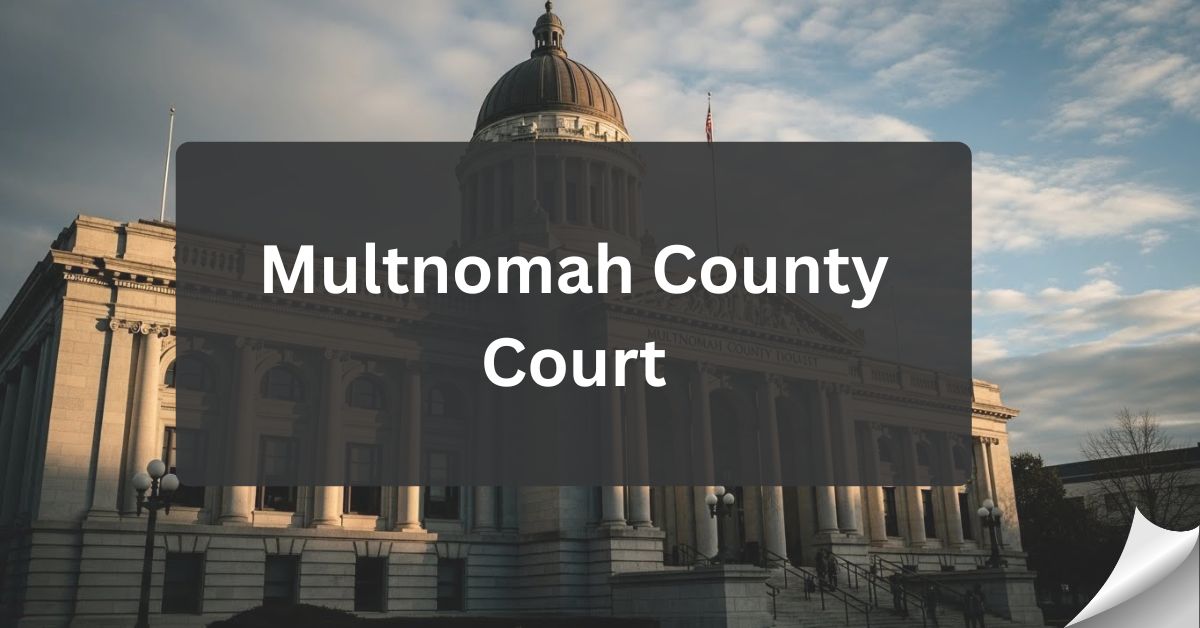
Multnomah County Court serves as the primary judicial authority for civil, criminal, family, and probate cases in Portland and nearby areas. The court operates as part of the county court system in Oregon and follows established state laws. It handles filings, hearings, rulings, and judgments that affect residents, businesses, and public agencies. Many proceedings take place in a central courthouse, creating a consistent process for case handling. This structure supports clarity and trust within the judicial system in Multnomah County.
Multnomah County Court records provide official documentation for every stage of a case. These records include dockets, motions, decisions, and final outcomes, forming reliable public court data. People use these records for legal review, background checks, research, and reporting. Attorneys, residents, journalists, and businesses all rely on accurate legal records access. This page explains how local court information works and what users can expect from public records.
How to Search Multnomah County Court Records
Multnomah County court records can be searched online through the official Oregon court system using a name or case number. Entering accurate details and using filters correctly helps users find the right case faster.
Official URL
The official public court records system is provided by the Oregon Judicial Branch:
https://www.courts.oregon.gov/services/online/pages/records-calendars.aspx
This page leads users to the statewide case lookup system used by the Multnomah County Circuit Court and other Oregon courts.
What the Court Records Search Tool Is Used For
The online tool allows the public to:
- Search active and closed cases
- View party names and case status
- Check hearing dates and case history
- Confirm case numbers and filing dates
Open the Official Court Records Page
Visit the official URL listed above. Scroll until the public records search option appears.
Select a Search Method
The tool offers two main search options:
- Name search
- Case number search
Users should choose the option that matches the information they have.
Enter Party Name
For name searches:
- Enter the last name first
- Add the first name if known
- Leave middle name blank if unsure
Enter Case Number
For case number searches:
- Enter the full case number
- Keep dashes and formatting exactly as shown on documents
Use Date Range Filters
Date filters reduce long result lists.
Users can:
- Select a filing year
- Enter a custom date range
Select Case Type
The tool may allow users to narrow results by case category:
- Criminal
- Civil
- Family
- Probate
- Traffic
Submit the Search
Click the search button to load results. Results usually appear within seconds.
Review Search Results
Each result typically shows:
- Case number
- Party names
- Case status
- Court location
Open and Review Case Details
Clicking a case reveals:
- Filing dates
- Charges or claims
- Hearing schedule
- Case progress history
What is the Multnomah County Judicial System
The Multnomah County judicial system is a local component of Oregon’s statewide judiciary that manages civil, criminal, and family cases within the county. It operates alongside Oregon’s circuit and federal courts, each handling distinct types of legal matters.
Multnomah County is part of Oregon’s county court system, which functions within the broader structure of state and federal courts. The county court primarily addresses local legal issues and enforces state laws at a community level. It works under the authority of the Oregon Judicial Department (OJD), ensuring that residents have access to fair and organized legal proceedings. Local courts in Multnomah County are designed to resolve disputes efficiently while maintaining public trust in the judicial authority.
How County, Circuit, and Federal Courts Differ
Oregon’s judicial framework is tiered, with county courts handling cases that are less complex or involve local ordinances. Circuit courts oversee more serious civil and criminal matters and may hear appeals from county courts. Meanwhile, federal courts handle cases involving federal law, constitutional issues, or disputes between states and residents from different states.
Key distinctions include:
- County courts: Minor criminal offenses, traffic violations, small claims, and local ordinance disputes.
- Circuit courts: Major criminal cases, family law, probate, civil lawsuits over larger amounts.
- Federal courts: Federal crimes, constitutional claims, immigration issues, and interstate disputes.
Types of Cases and Public Interaction
Within Multnomah County, the judicial system handles a wide variety of cases:
- Criminal cases: Misdemeanors, felonies, and DUIs.
- Civil matters: Property disputes, contracts, and small claims.
- Family cases: Divorce, child custody, and support.
- Probate issues: Wills, estates, and guardianships.
- Juvenile matters: Delinquency and dependency cases
Court Jurisdiction in Multnomah County
Court jurisdiction in Multnomah County defines which courts have the legal authority to hear specific types of cases. It depends on both the nature of the case and the geographic location where the dispute or incident occurred.
What Is Court Jurisdiction?
Court jurisdiction refers to the legal authority a court has to hear and decide cases. It establishes boundaries for both the subject matter of a case and the geographic area in which a court can operate. In Multnomah County, this ensures that civil, criminal, family, and probate matters are handled by the appropriate court.
Jurisdiction is generally divided into two main types:
- Subject-matter jurisdiction – Determines which court can hear a case based on its type, such as civil disputes, criminal offenses, or juvenile matters.
- Geographic jurisdiction – Limits a court’s authority to cases that occur within Multnomah County or affect its residents.
Jurisdiction by Case Type
Different courts in Multnomah County handle distinct categories of cases:
- Circuit Court – Oversees major civil cases, felony criminal cases, probate issues, and family law matters. It has the authority to review complex legal questions and administer justice in serious disputes.
- District Court – Handles misdemeanors, traffic violations, and small claims cases. It provides quicker resolutions for less severe legal matters.
- Juvenile Court – Focuses on cases involving minors, including dependency, delinquency, and child welfare matters.
- Specialty Courts – Includes treatment courts, such as drug and mental health courts, addressing specific rehabilitative needs.
Appeals and Escalation Paths
If a party disagrees with a decision, Oregon’s judicial system allows appeals to higher courts. Cases from District Court can often be escalated to the Circuit Court, while decisions from Circuit Court can move to the Oregon Court of Appeals. In rare instances, particularly significant legal questions may reach the Oregon Supreme Court.
Key Points to Remember:
- Court jurisdiction governs both the type of case and the location.
- Each court has a clearly defined role to maintain order and efficiency.
- Appeals provide a structured path for review and oversight.
Types of Courts in Multnomah County
Multnomah County Court includes several courts, each handling specific types of legal matters. Residents and attorneys rely on these courts to resolve civil, criminal, family, and juvenile cases efficiently.
Circuit Court
The Circuit Court is the primary trial court in Multnomah County. It handles major civil cases, serious criminal offenses, and felony trials. This court also oversees probate matters and has the authority to issue injunctions or other judicial orders. Judges in circuit court hear cases ranging from property disputes to complex personal injury lawsuits.
Key features of Circuit Court:
- Handles felony criminal cases and serious civil disputes
- Oversees probate and estate matters
- Conducts jury trials and bench trials
- Provides appeals for lower court decisions
District Court
The District Court deals with smaller civil claims and misdemeanor criminal offenses. This court is often the first step for individuals involved in traffic violations, minor theft, or landlord-tenant disputes. Cases in district court generally move faster than in circuit court, allowing for quicker resolutions.
District Court highlights:
- Misdemeanor criminal cases and small claims
- Traffic and ordinance violations
- Preliminary hearings for more serious charges
- Expedited case processing
Family Court
Family Court focuses on issues related to families and children. It handles divorce, child custody, child support, and domestic violence cases. The court emphasizes resolving conflicts in a way that prioritizes the well-being of children while protecting the rights of all family members.
Family Court responsibilities include:
- Child custody and visitation arrangements
- Divorce settlements and spousal support
- Protective orders for domestic violence victims
- Paternity and adoption matters
Probate Court
The Probate Court manages wills, estates, and guardianship cases. When someone passes away, probate court ensures that their assets are distributed according to their will or state law. It also supervises guardianships and conservatorships for individuals unable to manage their affairs.
Functions of Probate Court:
- Validating wills and distributing estates
- Managing trusts and financial accounts
- Appointing guardians for minors or incapacitated adults
- Handling estate disputes
Juvenile Court
The Juvenile Court addresses legal matters involving minors under 18. Cases can include delinquency, status offenses, or dependency matters where children need protection from neglect or abuse. This court aims to provide rehabilitative services rather than purely punitive measures.
Juvenile Court focus areas:
- Delinquency hearings for youth offenders
- Child abuse or neglect cases
- Dependency and foster care matters
- Juvenile treatment programs
Treatment Court
Treatment Courts are specialized programs designed for individuals with substance abuse or mental health issues. They integrate court supervision with treatment programs to reduce recidivism and support recovery. These courts emphasize accountability while offering structured support to participants.
Treatment Court features:
- Substance abuse and mental health programs
- Regular court check-ins with judges
- Coordinated treatment and counseling services
- Focus on rehabilitation and community reintegration
Trial Court Administration & Court Officials
The Trial Court Administrator oversees the daily operations of local courts, ensuring that administrative functions run smoothly. This role is separate from elected officials like the Clerk of Courts and focuses on management, efficiency, and compliance within the court system.
Role of the Trial Court Administrator
The Trial Court Administrator is responsible for coordinating court administration, managing staff, and ensuring procedural rules are followed. Barbara Marcille currently holds this position and provides leadership for administrative processes across the court system. Her work ensures that judges, clerks, and court staff can focus on hearings and cases without administrative delays.
Key duties include:
- Maintaining official court records and ensuring their accuracy
- Managing the court seal and overseeing its proper use
- Administering oaths to officials and witnesses
- Documenting and distributing verdicts and judgments
- Coordinating court schedules and administrative staff
Examining Multnomah County Court Records
Multnomah County court records provide official documentation of legal proceedings and decisions in the county. They include filings, dockets, judgments, and transcripts that reflect how cases progress through the court system.
Court records serve as a vital resource for legal research, background checks, and verifying judicial actions. They offer transparency by showing what happens during court proceedings and the outcomes of legal disputes.
What Court Records Include
Multnomah County court records cover a wide range of judicial records, each serving a specific purpose:
- Dockets: Summaries of scheduled court events, hearings, and case progress.
- Filings: Legal documents submitted by parties, including complaints, motions, and petitions.
- Judgments: Official rulings issued by the court, indicating the resolution of a case.
- Transcripts: Word-for-word records of court hearings, often used in appeals or legal research.
Who Maintains Court Records
Multnomah County courts are responsible for maintaining all public court data and judicial documents. Records are kept by the Clerk of the Court, ensuring that documents are accurate and organized. The county’s records management system tracks both active and closed cases, making it easier for authorized users and the public to locate information.
Records may be stored in physical formats, such as paper files, or digitally through secure court databases. Digital systems allow for faster retrieval, better organization, and improved preservation of sensitive legal information.
Types of Court Records Available
Public court data includes a variety of official records maintained by local, state, and federal courts. These records provide information on criminal, civil, family, probate, and juvenile cases, each serving different legal and informational purposes.
Criminal Records
Criminal court records document cases involving alleged violations of the law. These records typically include:
- Arrest records and charges
- Court filings and motions
- Trial outcomes, including convictions or acquittals
- Sentencing information and probation details
Criminal records are frequently used by law enforcement, background check services, and legal professionals. They help verify legal histories and track ongoing cases. Access to these records may vary depending on state regulations and the sensitivity of the information.
Civil Records
Civil case records cover disputes between individuals, organizations, or government entities where no criminal charges are involved. Common types of civil records include:
- Contract disputes and breach claims
- Property disputes and landlord-tenant cases
- Personal injury claims and lawsuits
Civil records often show filings, motions, court rulings, and settlements. These records are valuable for legal research, property transactions, and verifying potential liabilities. Public civil data is typically accessible unless sealed by a court order.
Family Law Records
Family court records focus on legal matters involving familial relationships. These may include:
- Divorce and separation proceedings
- Child custody and visitation arrangements
- Child support and spousal support orders
- Adoption and guardianship filings
Family court records are sensitive, and some information may be restricted to protect the privacy of minors. They are often consulted by attorneys, social services, and parties involved in family disputes.
Probate Records
Probate records relate to the administration of estates after a person passes away. Key documents include:
- Wills and codicils
- Letters of administration
- Estate inventories and appraisals
- Probate court orders
These records are important for beneficiaries, legal representatives, and financial institutions. They help confirm the validity of wills, track estate assets, and resolve disputes over inheritances.
Juvenile Records
Juvenile court records involve cases with minors and are usually restricted to protect privacy. These records can include:
- Delinquency cases and adjudications
- Child welfare and protection proceedings
- Rehabilitation program information
Online Access to Court Records
Legal records access can now be achieved through secure online platforms that allow users to view court documents electronically. These systems make it possible to check case details, filings, and court decisions without visiting a courthouse.
Modern electronic court systems have transformed the way people interact with public legal records. Instead of waiting in line or submitting paper requests, many jurisdictions now provide a digital portal for online court records. Users can search by case number, party name, or filing date, streamlining the process for both legal professionals and the public.
How Online Court Records Work
Most courts maintain secure databases where documents are uploaded in real time. This includes:
- Civil, criminal, and family case filings
- Court judgments and orders
- Motion papers and briefs
- Public notices and administrative records
Users typically create an account, verify their identity, and then gain limited or full access depending on the court’s rules. Certain sensitive documents, such as juvenile or sealed records, remain restricted for privacy reasons.
These electronic court systems often include features like:
- Advanced search filters to narrow results by case type or date
- Downloadable documents in PDF format
- Notification alerts for case updates or filings
A 2022 study by the National Center for State Courts found that courts offering online records access reduced administrative inquiries by over 40%, showing that these platforms improve efficiency for staff and users alike.
In-Person Court Record Requests
Local court information can be obtained directly at the courthouse by visiting the clerk’s office. This method allows individuals to request and review physical copies of case files and official court documents.
Visiting a courthouse in person remains a reliable way to access courthouse record requests. The clerk’s office serves as the central point for retrieving civil, criminal, family, and probate case files. Many courts require visitors to provide identification and specific case details, such as the names of parties involved or case numbers, to locate the correct records efficiently.
How In-Person Requests Work
When requesting records in person, the process typically involves:
- Contacting the clerk’s office to confirm hours and document availability.
- Submitting a formal request with details like case type, filing date, or parties’ names.
- Reviewing documents onsite or requesting certified copies for official purposes.
Advantages of In-Person Access
Accessing local court information in person can provide immediate verification of records, especially for documents that are not yet digitized. It ensures accuracy and allows for hands-on assistance from court personnel. Additionally, certain records may be restricted online, making courthouse visits the only option for full access.
Fees, Certified Copies & Processing Times
Legal records access often involves fees and specific processing times, especially when requesting certified court copies. The cost and turnaround depend on the type of document and the method of request.
Courts typically charge court record fees to cover administrative costs. Fees vary by document type: standard copies are usually lower in cost, while certified copies, which include an official seal and signature, may be higher. Payment is generally accepted by cash, card, or check, depending on the courthouse policies.
Certified Copies and Fees
Certified court copies serve as official evidence of a case or judgment. They are commonly required for:
- Property transactions or legal filings
- Immigration or background verification purposes
- Appeals or formal legal proceedings
Fee structures often include a base charge per page, with additional fees for certification or expedited processing. For example, some counties may charge $1–$2 per page, plus a $5–$15 certification fee.
Processing Times
Processing times for legal records access can vary:
- In-person requests: Often completed the same day or within a few hours, depending on the clerk’s office workload.
- Mail or online requests: Usually take 5–10 business days; expedited options may be available for an additional fee.
Locations & Addresses
Multnomah County Court locations are spread across Portland to serve residents with civil, criminal, family, and juvenile matters. Each courthouse provides distinct services, ensuring cases are handled efficiently and accessibly.
Understanding the locations and addresses of these courts can save time and help plan visits, whether for filing documents, attending hearings, or seeking public court information.
Multnomah County Courthouse
Address: 1200 SW 1st Ave, Portland, OR 97204
Phone: 971-274-0500
The Multnomah County Courthouse is the main judicial building, handling a wide range of cases including civil, criminal, and probate matters. Visitors can find public counters for case information, filing, and payment services.
Key Features:
- Multiple courtrooms for civil and criminal proceedings
- Public information desk and self-service kiosks
- Parking available nearby with accessible options
Justice Center
Address: 1120 SW Third Avenue, Third Floor, Portland, OR 97204
Phone: 971-274-0750
The Justice Center houses several court divisions, including district-level criminal and traffic courts. It also coordinates with law enforcement for timely case processing.
Services Offered:
- Criminal and traffic court hearings
- Probation and pre-trial services
- Legal aid and community resource referrals
Juvenile Justice Center
Address: 1401 NE 68th Avenue, Portland, OR 97213
Phone: 971-274-0800
The Juvenile Justice Center focuses exclusively on cases involving minors. It handles delinquency, dependency, and related hearings while providing access to counseling and rehabilitation programs.
Highlights:
- Juvenile courtrooms and conference rooms
- Family support services and social worker offices
- Educational and treatment programs
East County Courthouse
Address: 18480 SE Stark Street, Portland, OR 97233
Phone: 971-274-0700
East County Courthouse serves residents in the eastern parts of Multnomah County. It primarily handles civil and small claims cases, making it a convenient option for local communities.
Features:
- Accessible courtrooms for civil hearings
- Filing counters for public documents
- Free and paid parking options
Mark O. Hatfield U.S. Courthouse
Address: 1000 SW Third Ave., Portland, OR 97204
The Mark O. Hatfield U.S. Courthouse hosts federal cases, including bankruptcy, civil, and criminal matters under U.S. law. While separate from county courts, it is a major judicial hub in Portland.
Additional Information:
- Federal courtrooms with security screening
- Public access to case files and hearings
- Parking and transit options in downtown Portland
History of the Multnomah County Courthouse
The Multnomah County Courthouse has been a key part of Portland’s judicial system for more than 150 years. Its evolution reflects the city’s growth and the continuous provision of legal services.
Early Construction (1866)
- Original courthouse completed in 1866.
- Served as the first dedicated facility for county legal proceedings.
- Central hub for civil and criminal cases in Portland.
Expansions in the Late 19th Century
- North Wing added in 1885 to accommodate growing caseloads.
- South Wing added in 1889, providing additional courtrooms and office space.
- Early expansions highlighted the county’s commitment to civic infrastructure.
Construction of the Current Courthouse (1914)
- Original buildings replaced due to increased demand.
- Current courthouse built in 1914 on the same site.
- Combined functional design with classical architectural elements.
- Preserved central location in downtown Portland for public accessibility.
Historical Significance
- Hosted countless trials, hearings, and civic events over decades.
- Represents continuity of judicial services in Multnomah County.
- Serves as both a functional courthouse and a cultural landmark in Portland.
Frequently Asked Questions
Multnomah County court records are generally public and can be reviewed by the public, though some sensitive details may be restricted. They include information on civil, criminal, family, and probate cases handled within the county
Are Multnomah County court records public?
Most court records in Multnomah County are public, which helps maintain transparency in local judicial proceedings. These records cover civil lawsuits, criminal cases, family matters, and probate proceedings. While sensitive information, such as Social Security numbers or certain juvenile case details, is kept confidential, basic case information and filings are accessible to the public either online or in person at the courthouse.
How far back do court records go?
The availability of court records varies depending on the case type. Civil and criminal case records are generally available from the 1970s onward. Family court documents may be restricted for privacy reasons and can be found from the 1980s. Probate records can extend back to the early 1900s, with older files stored physically in archives while more recent records are digitized for online access.
Can I search court records for free?
Yes, it is possible to search certain court records in Multnomah County without paying a fee. The county provides online portals for civil, criminal, and family cases where users can view case details. While certified copies of documents may require payment, preliminary searches and access to basic information are generally free.
How can I request a physical copy of a court record?
To obtain a physical copy, individuals usually need to contact the Multnomah County Clerk’s office or visit the courthouse in person. Requests may involve completing a form and paying a small fee for copying or certification. This process applies to both recent cases and archived files that are not available online.
Are juvenile court records available to the public?
Juvenile court records in Multnomah County are typically restricted to protect privacy. These records are generally not accessible online or to the public and may only be viewed by parties directly involved, such as parents, legal guardians, or attorneys. Court approval is required to access juvenile case files for research or other purposes.
What types of cases can I find in Multnomah County court records?
Multnomah County court records include criminal cases, civil lawsuits, family law matters, probate cases, and traffic violations. Users can search for case details, court filings, and case outcomes. While online portals cover many types of cases, older records or sensitive filings may require an in-person review or formal request through the clerk’s office.